An end-to-end system for an aesthetics clinic: patients talk to an AI assistant on WhatsApp that handles triage and booking, and everything feeds a management dashboard the doctor uses to run the business. I directed the build from concept to production — combining design judgment with fast execution to ship a complete, working product.
The clinic ran on the doctor's personal WhatsApp. Every new-patient message landed in the same inbox as her private life — so it became chaos: messages got buried, some were never seen, and replies often came hours (sometimes a day) late.
For an aesthetics clinic, that slow first response is lost revenue. A prospective patient who doesn't hear back quickly books somewhere else. The doctor was also doing triage and scheduling by hand, on top of actually seeing patients — so the bottleneck was her, and it capped how many new clients the clinic could take on.
Two problems, really:
A single system with two connected sides.
I named the assistant Rafa — personifying her was a deliberate design choice: a name makes a patient feel handled by someone, not interrogated by a form. She runs on a dedicated WhatsApp line, separate from the doctor's personal number, and:
New patients now get scheduled without the doctor ever touching her phone.
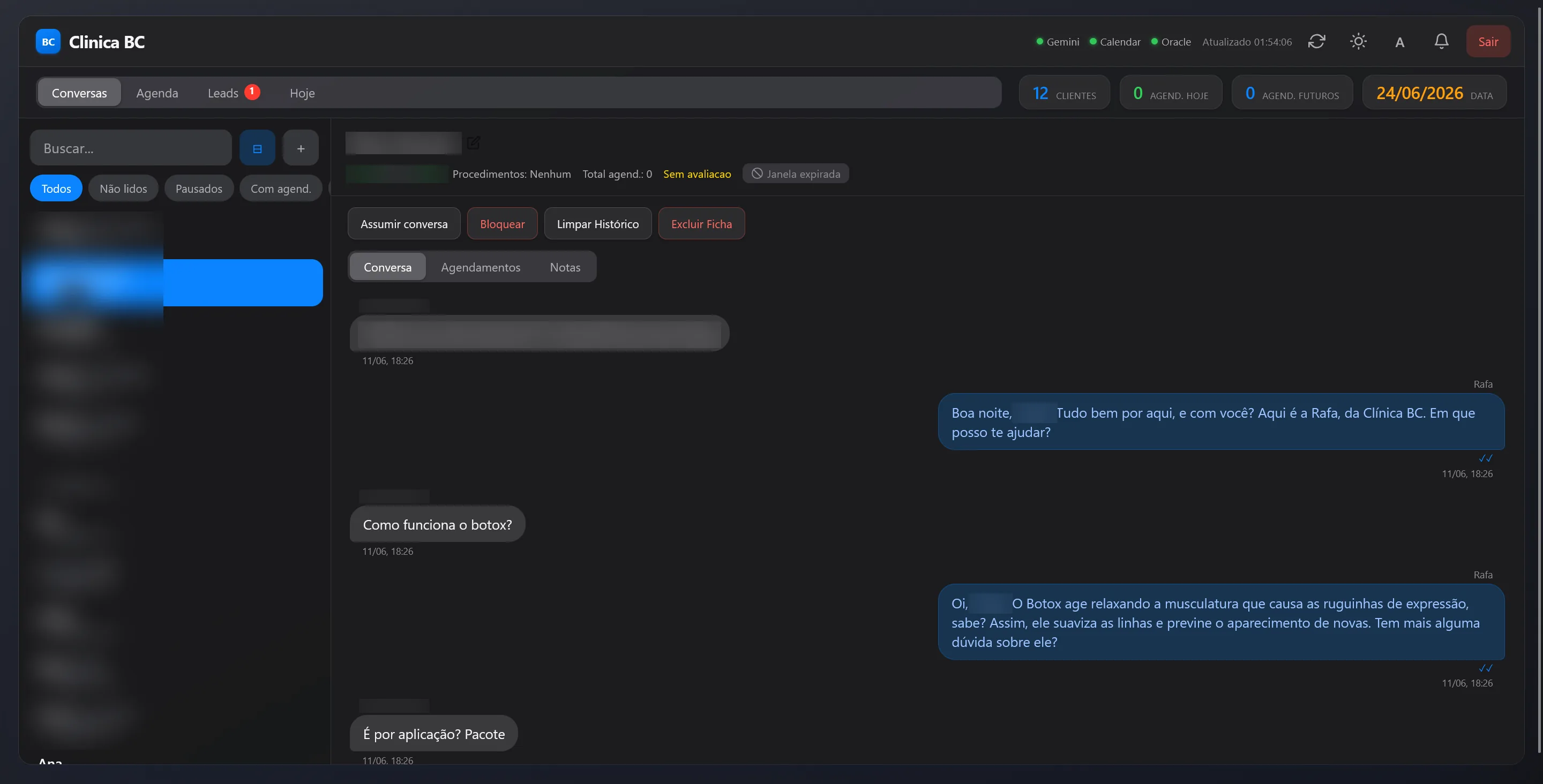
Rafa handling a WhatsApp chat in natural language (patient data redacted).
Everything the assistant handles flows into a panel where the doctor runs the clinic as a business, not just a calendar. It surfaces what drives decisions: goals vs. actuals (money in vs. out), average ticket, client retention, expenses, and the best-performing procedure. She went from "busy inbox" to actually seeing where the revenue comes from.
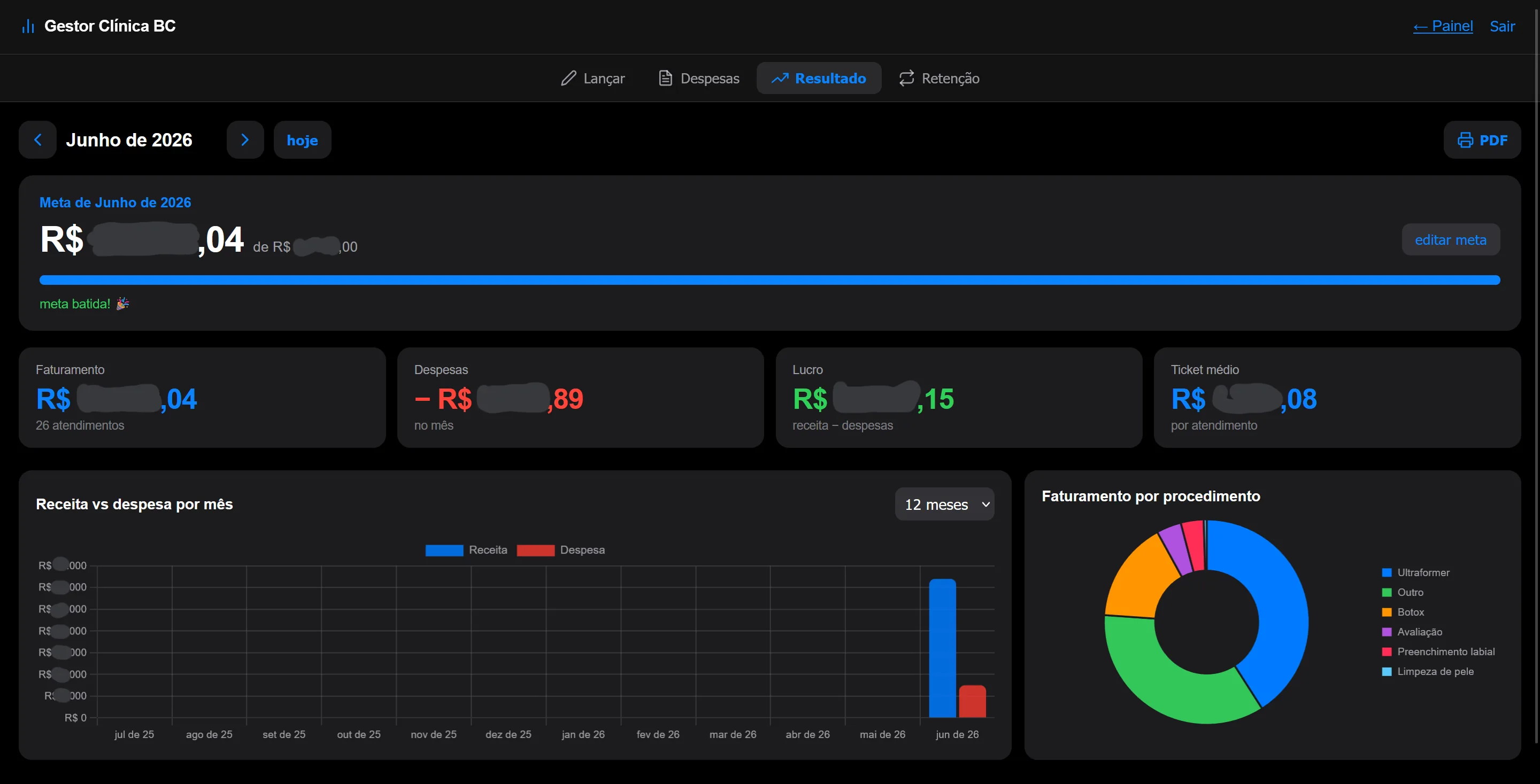
Financial manager: goals, revenue, expenses and top procedure, in real time.
Code is easy to generate fast today. What no tool decides is what to build, for whom, and why one screen is better than another. That was my job — and it's the whole point of the project.
I drove every iteration: requesting features, cutting the ones that added noise, and pushing on the details that separate a demo from a product.
I don't write production code — I direct the build with design intent. That combination (design critique + fast execution) is exactly how the whole thing got shipped.
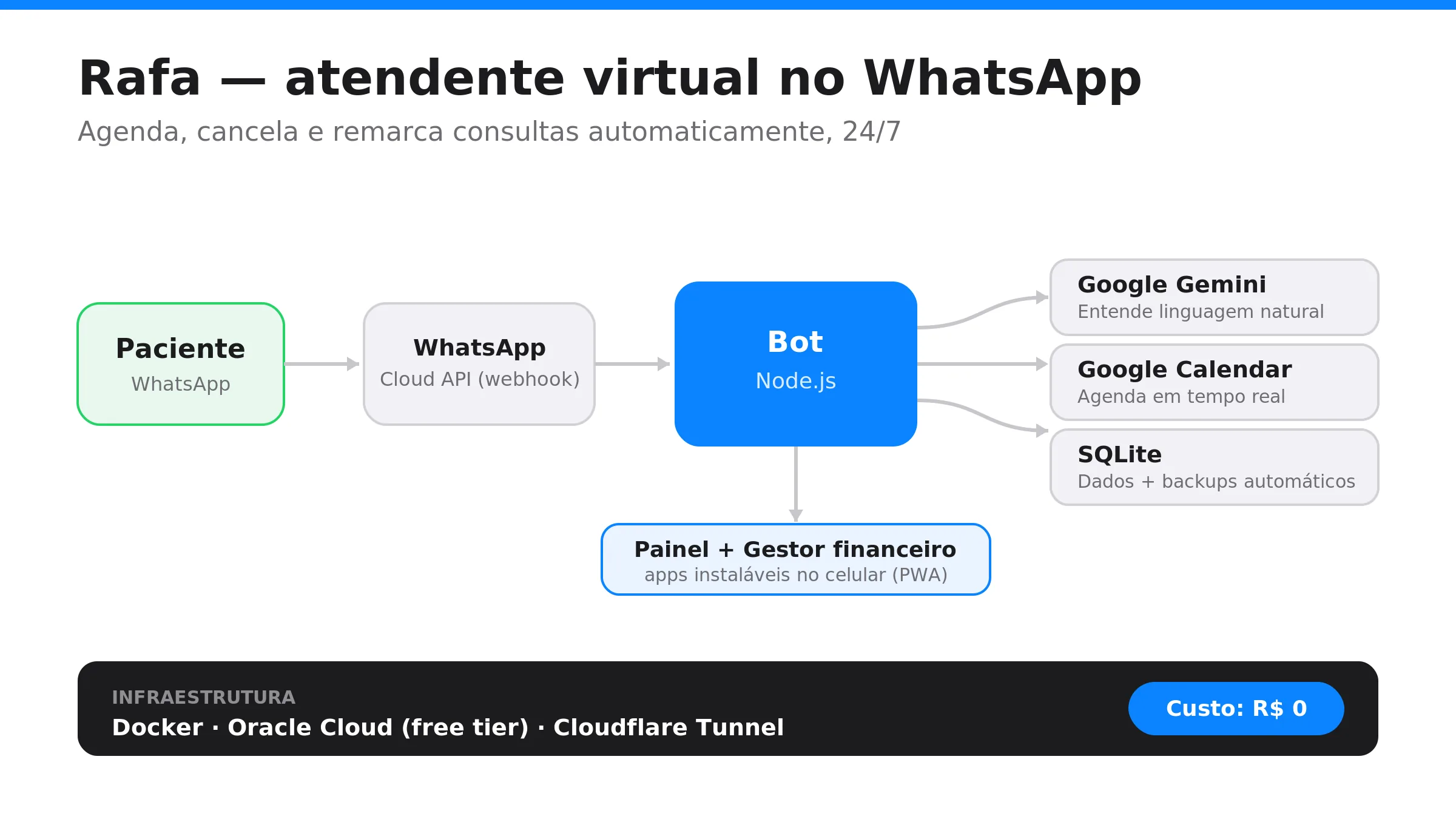
How the pieces connect — from patient to booking and management.
A designer's real leverage today isn't pixels in isolation — it's shipping a product that solves a specific person's problem. I took a messy, personal-WhatsApp workflow and turned it into a system a clinic runs on every day, by pairing design judgment with fast execution.
That's the way I work: start from the real problem, decide what good looks like, and build it fast.
If you need someone who starts from the problem, decides what good looks like, and ships a product people use — I'd love to talk.